
Skip to content
Oncoger
← BACK TO NEWS

CONGRESS

Oncoger at the XXX National Congress of Geriatrics and Gerontology: towards precision oncogeriatrics

By Oncoger team ·
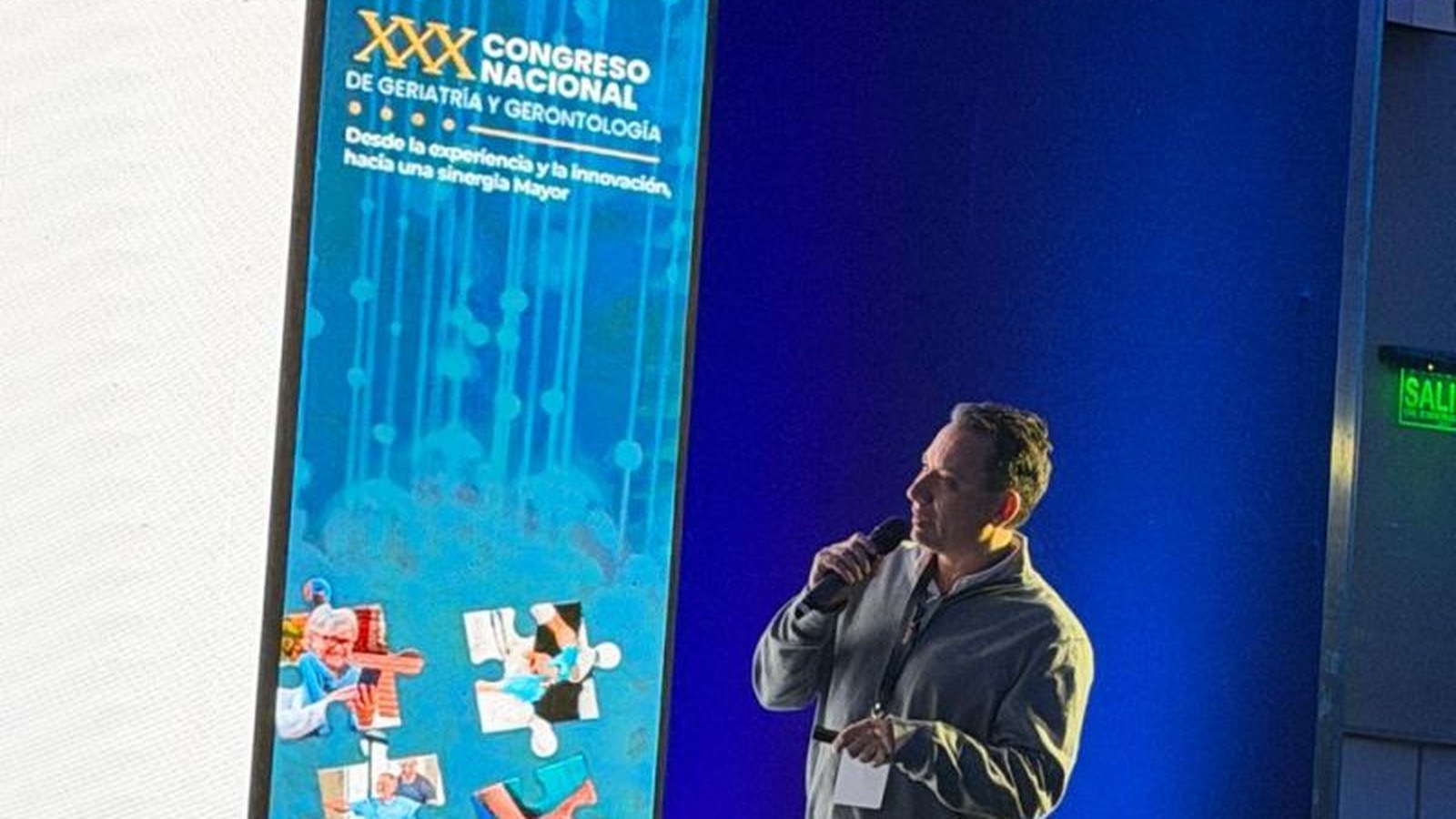
Dr. Gonzalo Navarrete speaking at the XXX National Congress of Geriatrics and Gerontology
Dr. Gonzalo Navarrete, oncologist and geriatrician and co-founder of Oncoger, during his lecture at the congress, whose theme was “From experience and innovation, towards a greater synergy”.

At the XXX National Congress of Geriatrics and Gerontology, Dr. Gonzalo Navarrete —oncologist and geriatrician at FALP and the University of Chile Clinical Hospital, assistant professor at the University of Chile School of Medicine and co-founder of Oncoger— delivered the lecture “International advances towards precision oncogeriatrics”. The talk traced the path from the biology of ageing to artificial intelligence applied to the treatment decision, and was the occasion to present PROTEGER to the national geriatric community.

We gather here the central ideas of the presentation in a summarised, interactive version, followed by an account of its main elements.

XXX National Congress of Geriatrics and Gerontology · 2026

International advances towards precision oncogeriatrics

Dr. Gonzalo Navarrete
Oncologist – Geriatrician · FALP – HCUCH
Assistant Prof., University of Chile School of Medicine · Co-founder of Oncoger
Oncoger

01 · The scale of the problem

Cancer is, increasingly, a disease of older people

80%
of older people with cancer will live in low- and middle-income countries by 2050
53%
of those over 65 experience moderate to severe toxicity (G3–5) from chemotherapy
48%
lose their entire wealth because of the illness
Estimated cancer prevalence in the U.S. (millions of people)
1975
3.6
2016
15.5
2040
26.1

Growth is concentrated in the groups aged 65 and over. Sources: ASCO Educ Book 2024; Hurria, JCO 2012; Am J Med 2018; Yabroff, JNCI 2008; Cancer Epidemiol Biomarkers Prev 2016.

01 · The scale of the problem · Chile

GES cancer delays increase with age

Rate of delays per 100,000 inhabitants, by age group

1.30–15 years25.216–2955.030–3980.140–49113.850–59194.8≥60 years

The highest rate is concentrated in people aged 60 and over. Source: CIPS-UDD, data obtained through freedom-of-information requests.

02 · Biological aspects

From cancer as mutation to cancer as ecosystem

Chronic inflammationfavours pro-tumour signalling
Immunosenescencereduces immune surveillance and response
Cellular senescenceSASP, tissue remodelling
Aged tumour ecosystem
Aged organism
Altered microenvironmentfibrosis, matrix, angiogenesis
Metabolism and microbiomemodulate growth and response
Reduced physiological reserveaffects treatment tolerance
In older people, toxicity and benefit do not depend on the tumour alone: cancer must be interpreted in the context of the ageing host.

Updated hallmarks of cancer, Cell 189 (April 2026); Nat Rev Cancer 2020; Br J Cancer 2023 (PhenoAge: +9% risk per +1 SD of biological age).

03 · The evidence gap

We prescribe 21st-century treatments based on data that ignore the real geriatric patient

129 drugs approved by the FDA (2013–2023)
41% do not improve overall survival or quality of life at 5 years
42.3% of participants ≥65 years
immunotherapy trials 2018–2022
11.1%
participants ≥75 years
98% of trials exclude ECOG >1 · none includes a baseline geriatric assessment

J Immunother Cancer 2024;12:e009258 · JAMA Oncol 2021;7(5):728–734.

03 · The evidence gap

Clinical trial vs. older patient in real life

Median overall survival, in months

Pembrolizumab · metastatic NSCLC PD-L1 ≥50%

KEYNOTE-024 trial, 5 years
26.3
Real life, older with ECOG 2–3
1.6

Metastatic pancreatic cancer

Phase III, general population (nab-P + Gem)
8.7
Vulnerable older (GIANT, ≥70 + CGA)
≈4.5

Reck, JCO 2021 · Jpn J Clin Oncol 2025 · JNCI 2015 · EA2186/GIANT (NCT04233866). Relative scale within each group.

04 · What the oncogeriatric assessment adds

Comprehensive geriatric assessment with recommendations reduces severe toxicity

Usual careCGA-guided intervention
60.6%50.5%GAIN · toxicity G≥3 · p = 0.0271%51%GAP70+ · toxicity G3–5 · p < 0.01INTEGERATE−41%unplanned hospitalisations−39%emergency visitsand better quality of life

Li, JAMA Oncol 2021 (GAIN) · Mohile, Lancet 2021 (GAP70+) · Soo, Lancet Healthy Longev 2022 (INTEGERATE). Net incremental monetary benefit: GAP70+ CAD 2,231 and INTEGERATE CAD 2,104 per patient (JCO 2024/2026).

04 · Expert consensus in Chile

Recommended scales in the oncogeriatric assessment

Initial screeningG8detects vulnerability and defines the need for CGA
Comprehensive geriatric assessment
SPPBphysical performanceBarthelbasic functionLawton / PfefferinstrumentalMMSE-ChilecognitionGDS-5moodMAImedicationsCARG / CARG-BCtoxicityePrognosisprognosis
RecommendationCGA in people ≥65 with cancer who will receive systemic therapyG8 as screening when access to CGA is limitedIntegrate findings to individualise treatment and follow-up

Quilodrán Loyola, Martínez Fuentes, Jiménez Álvarez, Röling, Navarrete Hernández. J Geriatr Oncol 2026;17:102847.

04 · How to decide

Frailty is contextual: the same patient changes category depending on the cancer and the treatment

RobustVulnerableFrailDecision
Pancreatic cancerFOLFIRINOXNo treatment
Prostate cancerAbirateroneStandard treatment
Oesophageal cancerDefinitive chemoradiotherapyAdapted treatment
Frailty ≠ untreatable. Four classification systems applied to the same cohort (n = 763) yield frailty prevalences from 22.8% to 72.2%, with poor to moderate agreement (κ 0.24–0.50). The label does not replace the individual assessment of benefit, toxicity and preferences.

Ferrat, JCO 2017;35:766–777 · Rev Esp Geriatr Gerontol 2018.

04 · How to decide

The starting dose can be a therapeutic trial

1Startreduced starting dose
2Observeresponse · toxicity · function
3Adjustescalate · maintain · reduce · stop
GO2 trial · advanced gastro-oesophageal cancer · mean age 76 years · 58% severely frail60% of the standard dose: same survival, less toxicity
100%
80%
60%
Chemotherapy by body surface area ≠ physiological reserve. In vulnerable patients, a reduced starting dose with escalation according to tolerance is a reasonable standard.

Hall, JAMA Oncol 2021;7:728–734 (GO2).

05 · PROTEGER · Oncoger

From oncology + CGA to a systemic-therapy recommendation

1 · Development cohortn = 357Chilean Oncogeriatric Telecommittee · ≥65 years · solid tumours · referred to CGA
2 · TrainingOncology + CGAseveral algorithms + ensemble · reference: expert recommendation
3 · External validationn = 2722 tertiary centres · 2021–2025
ELIGIBLEsystemic therapyNOT ELIGIBLEsystemic therapy
629patients · 6 public centres, Antofagasta to Coyhaique
79years, median age
55%at stage IV
54%with cognitive impairment

Navarrete et al. J Geriatr Oncol 2026;17:103031 · TRIPOD-AI · ISRCTN11875539 · CORFO support.

05 · PROTEGER · external validation

The classification reproduces the expert decision and separates groups with different survival

0.84AUC

95% CI 0.78–0.89 · n = 272 against the oncogeriatric team's recommendation

Median survival at stage IV, by model classification

Eligible for systemic therapy
335 days
Not eligible
146 days

Geriatrician's decision in the same cohort: 310 vs 132 days · log-rank p < 0.05

Clinical validation under way · Chile (HCUCH, FALP, INC, Air Force Hospital, San Juan de Dios Hospital, Hernán Henríquez Hospital, Franco Ravera Hospital) · Peru (Oncosalud) · Brazil (HCor, Einstein, LACOG)

Navarrete et al. J Geriatr Oncol 2026;17:103031.

Conclusions · precision oncogeriatrics

Better assessment means better treatment

Chronological age is not enough: the decision integrates biology, functional reserve, benefit, toxicity and the patient's goals.

Treatstandard or adapted
Optimiseprehabilitate · adjust · alternatives · align with goals
Do not treatpalliative care · symptom control · comfort
“Technology supports; the final decision remains with the clinical team and, together, with the patient.”
1 / 13

Summarised, interactive version of the presentation (13 screens). Navigate with the arrows, the keyboard or by swiping on mobile.

The scale of the problem

Cancer is, increasingly, a disease of older people. In the United States, the estimated prevalence of cancer will rise from 15.5 million people in 2016 to 26.1 million in 2040, with growth concentrated in the groups aged 65 and over. By 2050, 80% of older people with cancer will live in low- and middle-income countries. The consequences of treatment in this group are significant: among those over 65, 53% experience moderate to severe toxicity from chemotherapy, and up to 48% lose their entire wealth because of the illness. In Chile, the problem also has an access dimension: delays in GES cancer guarantees increase with age and reach 194.8 per 100,000 inhabitants in people aged 60 and over, the highest rate of all age groups.

Cancer in the context of the ageing host

The biology of cancer has undergone a paradigm shift. The updated hallmarks framework no longer understands the tumour as a cell with mutations, but as a dynamic ecosystem that interacts with its microenvironment and with the whole organism; a single diagnosis may have different “ecotypes” and therefore a different response to treatment. In older people, that ecosystem is modulated by ageing: chronic inflammation, immunosenescence, cellular senescence, an altered microenvironment, metabolic and microbiome changes, and reduced physiological reserve. The clinical consequence is greater biological heterogeneity and one central fact: toxicity and benefit do not depend on the tumour alone. Ageing, moreover, is not only chronological: accelerated biological age raises cancer risk by around 9% per standard deviation, and treatments themselves accelerate the biological ageing of survivors.

The gap between clinical trials and the real geriatric patient

“We prescribe 21st-century treatments based on data that ignore the real geriatric patient,” Dr. Navarrete argued. Of 129 cancer drugs approved by the FDA between 2013 and 2023, 41% do not improve overall survival or quality of life at five years. In immunotherapy trials, only 42.3% of participants were 65 or older and just 11.1% were 75 or older; 98% of trials exclude patients with ECOG greater than 1 and none includes a baseline geriatric assessment. Real-world data show the distance: while the pivotal pembrolizumab trial in lung cancer reports a median survival of 26.3 months, older people with ECOG 2–3 treated in practice reach 1.6 months. In metastatic pancreatic cancer, the phase III standard offers 8.7 months; in vulnerable older patients, the observed survival was about 4.5 months, with no difference between regimens.

What the oncogeriatric assessment adds

The intervention evidence is solid. Three randomised trials show that comprehensive geriatric assessment with recommendations to the oncologist changes outcomes: GAIN reduced grade 3 or higher toxicity from 60.6% to 50.5%; GAP70+ reduced it from 71% to 51%; and INTEGERATE achieved 41% fewer unplanned hospitalisations, 39% fewer emergency visits and better quality of life. The assessment also generates economic value, with an estimated net incremental monetary benefit of CAD 2,231 per patient for GAP70+ and CAD 2,104 for INTEGERATE. In Chile, the expert consensus published in the Journal of Geriatric Oncology —co-authored by Dr. Navarrete— recommends applying CGA in people aged 65 and over with cancer who will receive systemic therapy, using G8 as screening when access to CGA is limited, and a set of scales by domain.

The guidelines, however, orient the intervention but do not complete the clinical decision: they do not classify the patient as robust, vulnerable or frail, do not state who should not receive treatment, and do not indicate in whom to start with a dose reduction. Two key messages from the talk: frailty is contextual —the same patient may be frail for FOLFIRINOX, robust for abiraterone and vulnerable for definitive chemoradiotherapy— and frailty does not mean “not treatable”. In vulnerable patients, a reduced starting dose with escalation according to tolerance is a reasonable standard, and the starting dose can be understood as a therapeutic trial: start, observe and adjust.

PROTEGER: artificial intelligence as decision support

That is the space PROTEGER seeks to fill: artificial-intelligence algorithms to assist oncology and geriatric teams in treatment decisions for older people with cancer. Published in the Journal of Geriatric Oncology and registered under TRIPOD-AI, the model was developed from the Chilean Oncogeriatric Telecommittee, integrating oncological and CGA variables, and was externally validated in two tertiary centres with an eligibility AUC of 0.84 against the expert recommendation. Its classification separates groups with clearly different survival and reproduces that of the oncogeriatric team. The national cohort now brings together 629 patients from six public centres from Antofagasta to Coyhaique, with a median age of 79 years, 55% at stage IV and 54% with cognitive impairment: a sample that reflects the complexity of real public oncology. Clinical validation continues in centres in Chile, Peru and Brazil.

Better assessment means better treatment

Chronological age is not enough. The oncogeriatric decision integrates tumour biology, functional reserve, expected benefit, risk and the patient's goals, and leads to three possible paths: treat, optimise or not treat. As Dr. Navarrete summed up in his guiding principle: “Technology supports; the final decision remains with the clinical team and, together, with the patient”.

References: Navarrete et al., J Geriatr Oncol 2026;17:103031 · Quilodrán Loyola et al., J Geriatr Oncol 2026;17:102847 · Li et al., JAMA Oncol 2021 (GAIN) · Mohile et al., Lancet 2021 (GAP70+) · Soo et al., Lancet Healthy Longev 2022 (INTEGERATE) · Hall et al., JAMA Oncol 2021 (GO2) · Ferrat et al., JCO 2017 · Hanahan, Cell 2026.