
IN THE MEDIA
Portal Red Salud: the Chilean platform that uses AI to anticipate whether an older person with cancer will tolerate their treatment
By Oncoger team ·
Portal Red Salud published a feature on PROTEGER, the cloud-based ecosystem developed by Oncoger that predicts whether an older person with cancer can tolerate systemic cancer treatment. The article, written by Luis Francisco Sandoval (Agencia S&M Comunicaciones), reviews the project's origins, the team behind it, how the model works and the results of its clinical validation, and gathers the view of Dr. Arnaldo Marín, deputy director of CORFO's PRECISION-Ai programme, of which PROTEGER is part.
0.84
AUC in external validation: discrimination ability out of 1
765 vs 275
days of average survival between patients classified as eligible and not eligible
2
successive stages per patient: eligibility and dose of systemic therapy
The team behind PROTEGER
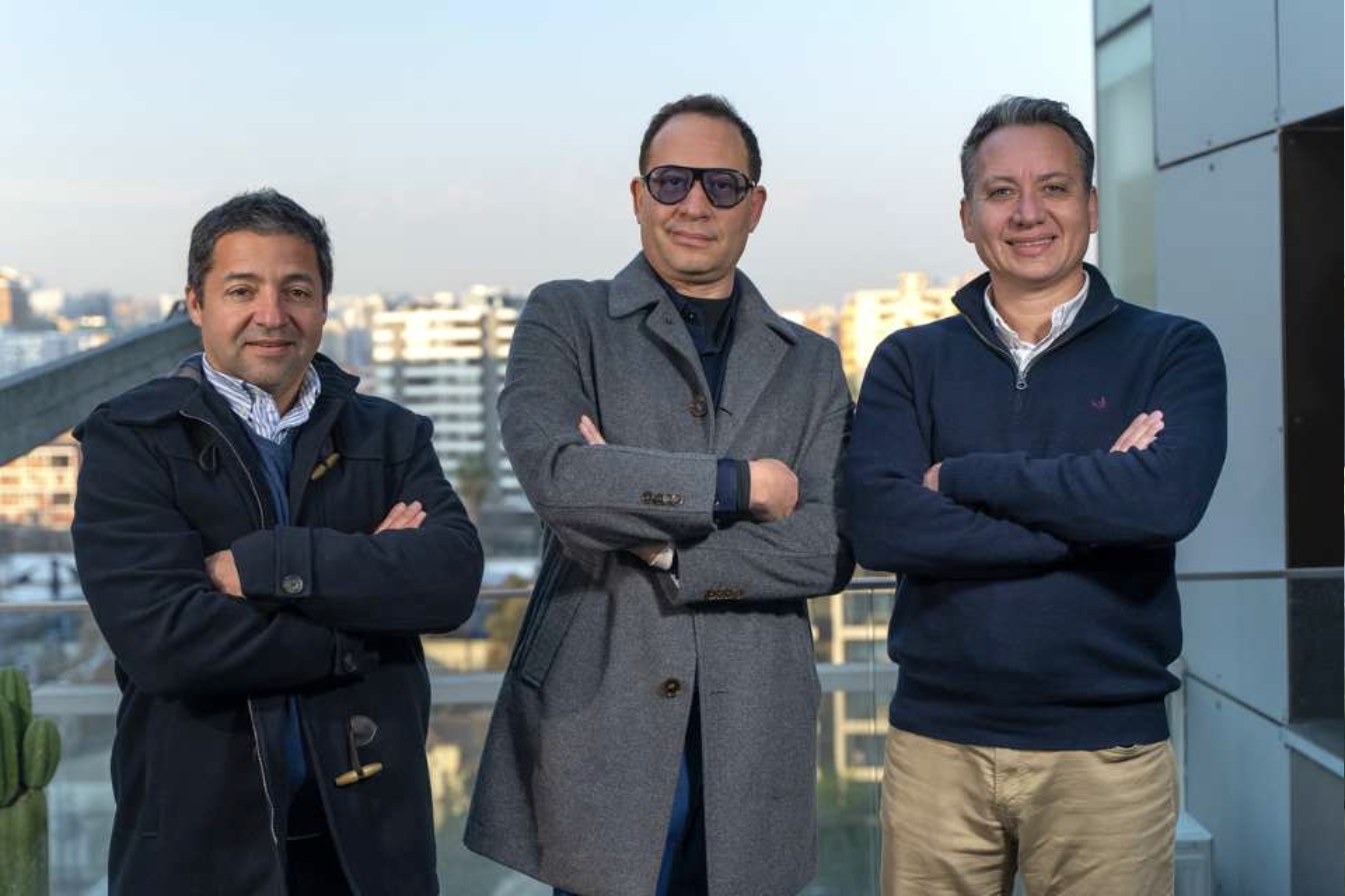
The feature presents Oncoger as the company co-founded by Dr. Gonzalo Navarrete, principal investigator and medical director of the project —the only specialist in Chile trained in internal medicine, geriatrics and oncology, and an assistant professor at the University of Chile—, and by Rodrigo Venegas, an entrepreneur with a track record in health and technology, who brings his experience leading health ventures focused on management, scaling and sustainability. The team is completed by Claudio Barrientos, a scientist and academic expert in artificial intelligence and responsible for the ecosystem's technological development, and Dr. Gabriel Martínez, deputy director of the project, geriatrician at Hospital Penco Lirquén and co-director of the Ministry of Health's telegeriatrics strategy.
A clinical problem in a saturated system
The article starts from the dilemma every treating team faces: deciding whether an older person with cancer should start chemotherapy or another systemic treatment without overtreating them or leaving them out of a therapy that could benefit them. That decision requires assessing frailty, function and toxicity risk before defining the regimen and, given the shortage of geriatricians, today it largely depends on each team's judgement. The context is demanding: around 70% of cancer deaths in Chile occur in people over 65 and, in March 2026, the Government declared an Oncological Health Alert to respond to more than 33,000 patients waiting for diagnosis or treatment.
We have an ageing population, and the point is whether it is feasible to give treatment to that older adult, whether it is worth it, or whether we are producing too much toxicity in that patient. That is where Proteger is born, with the idea of doing a correct oncogeriatric assessment, assisted by artificial intelligence.
How it works
PROTEGER combines the oncological diagnosis with geriatric variables —frailty, function, toxicity risk and autonomy, among others— and applies an ensemble-type artificial-intelligence model, externally validated. The process happens in two successive stages: the first determines whether the patient is eligible for systemic treatment; the second adjusts the dose intensity according to their frailty profile. The result is not a binary answer but a probability of eligibility, and the platform also identifies those who could benefit from prior preparation. As Dr. Marín describes, the tool «analyses and discriminates which patient seems unfit to go to cancer treatment and which one we should prehabilitate».
Evidence and next steps
In its external validation, PROTEGER reached an AUC of 0.84, and the patients it classified as eligible recorded an average survival of 765 days versus 275 days in those not eligible: a difference of almost 500 days that, according to Marín, confirms that «in a metastatic patient, deciding the first line of treatment is what will determine their survival». The results were published in 2026 in the Journal of Geriatric Oncology.
The platform is being integrated into clinical workflows and is being validated at the National Cancer Institute, Hospital Dr. Franco Ravera Zunino in Rancagua, Hospital Dr. Hernán Henríquez Aravena in Temuco, the Chilean Air Force Hospital, the University of Chile Clinical Hospital, Fundación Arturo López Pérez and Hospital San Juan de Dios in Santiago, as well as the AUNA centre in Lima and, soon, the HCor and Israelita Albert Einstein hospitals in São Paulo. Within PRECISION-Ai, CORFO's technology programme led by Universidad del Desarrollo and the University of Chile, the goal is to reach a technology-readiness level of TRL 9 in 36 months, scale the tool in public and private centres, integrate it into electronic clinical-record systems and define a sustainability model beyond public funding.
We are willing to work with the public services, so that this reaches people wherever they are. For us it is vital that this moves to the public services, where there are many needs, with an optimisation of human resources as support for the patient's journey.